
Essex oyster exports lost to Brexit could return under UK-EU deal
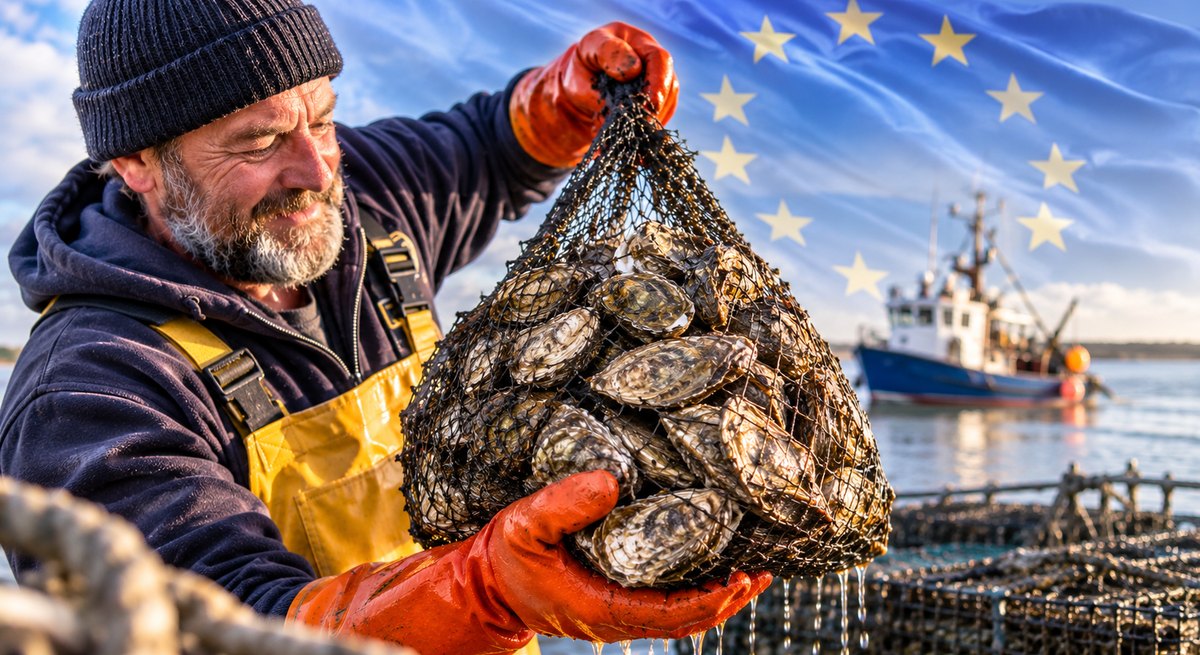
Oyster farmers and fishermen on Mersea, the Colne, the Crouch and the Roach could win back European customers they lost after Brexit, under the food and farming deal the UK and the EU agreed in Brussels on Friday.
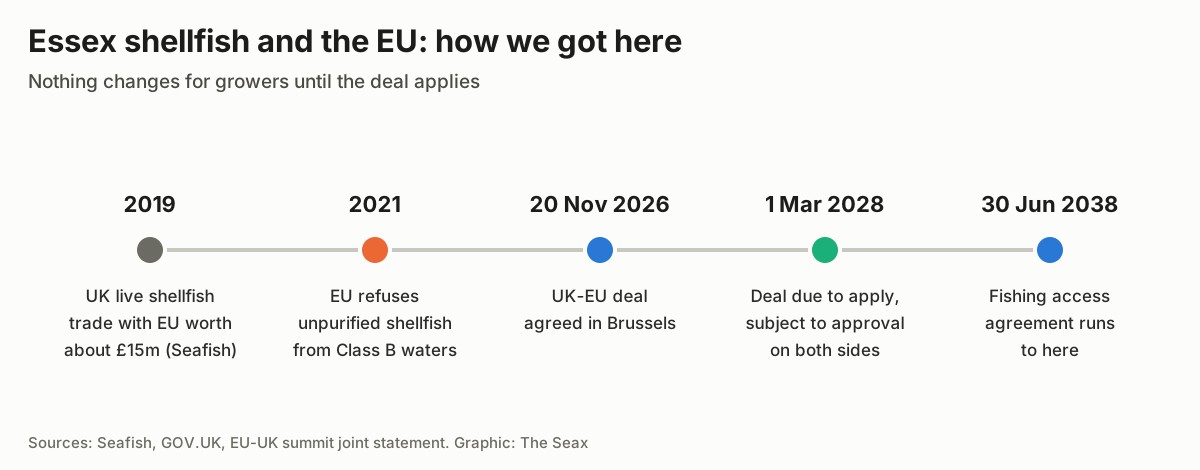
Since 2021 the EU has refused live oysters, mussels, clams and cockles from British waters graded Class B unless they have already been purified. Class B waters are clean enough to farm shellfish but not clean enough for them to be eaten straight from the water. Before Brexit, shellfish from those waters was sent to the continent and purified there.
Most Essex oyster waters are Class B
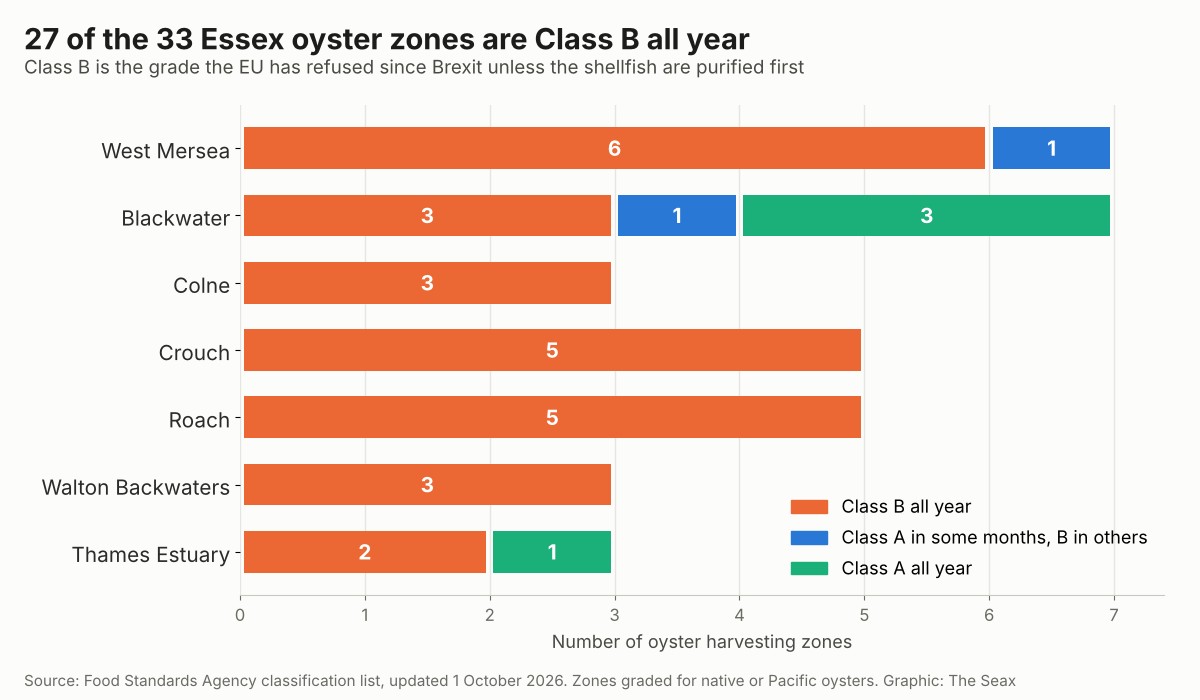
A Seax analysis of the Food Standards Agency's latest classification list, updated on 1 October 2026, shows how hard that rule hits the county. Of the 33 harvesting zones on the Essex coast graded for native or Pacific oysters, 27 are Class B all year round, one of which also closes every September. Two are Class A only in some months, and just four are Class A all year.
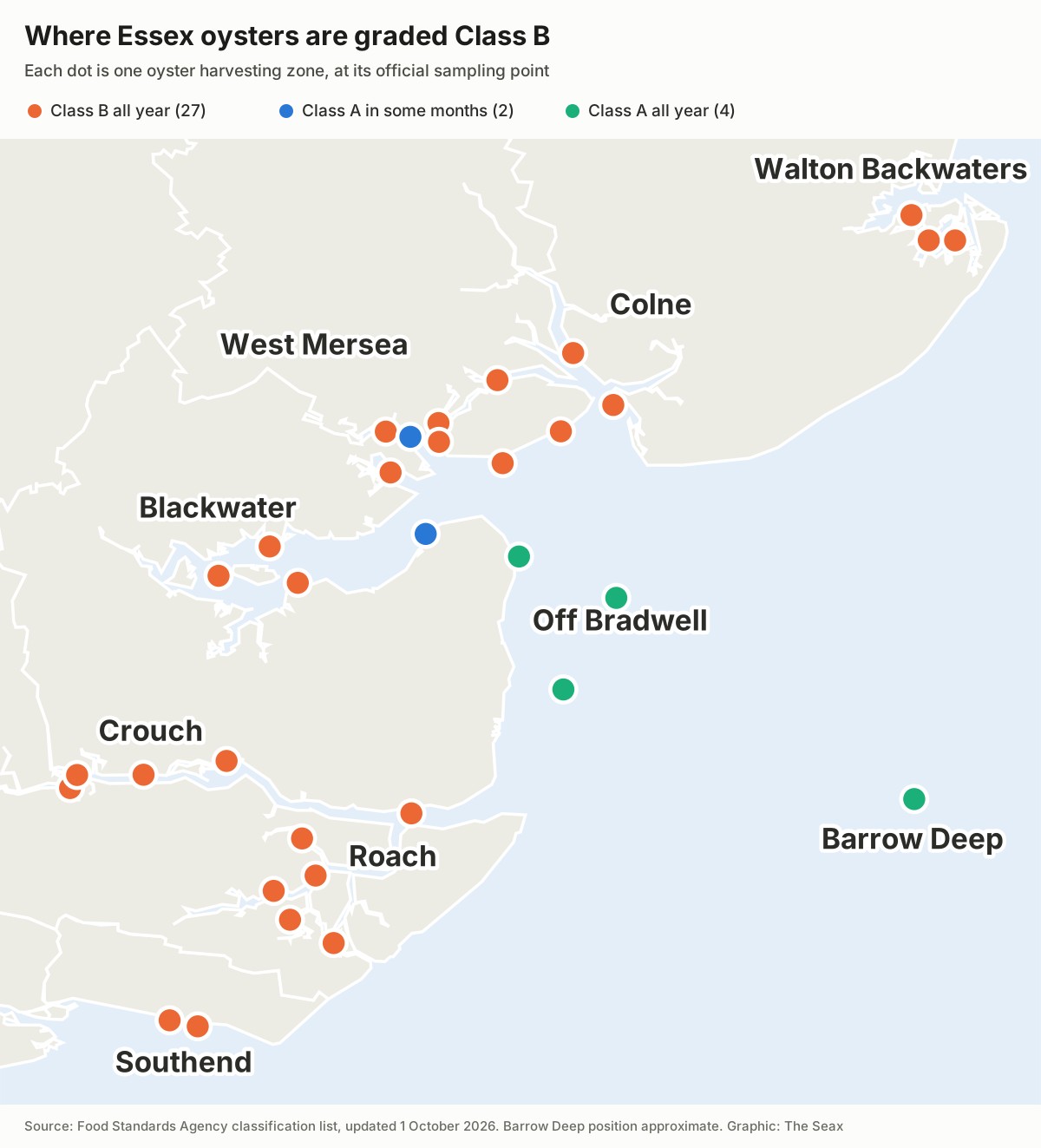
Six of the seven West Mersea oyster zones are Class B, including Ray Creek, Strood Channel and Salcott Channel. Little Ditch is the exception, graded Class A from November to April. Every oyster zone on the Colne, the Crouch and the Roach is Class B, as are the three in the Walton Backwaters. The Blackwater is mixed: Ray Channel, St Peter's Flats and St Peters & Batchelor are Class A all year, Outer Blackwater is Class A from September to April, and Central Blackwater, Goldhanger and Osea South are Class B.
Cockles tell a similar story. The cockle beds on Southend Flats, Maplin West and Maplin Central are Class B, while Maplin East and the Barrows are Class A only from June to September.
What the deal changes
The government's guidance for fish and shellfish businesses says it expects the agreement to reopen exports of live shellfish from Class B waters to the EU for purification.
Seafish, the industry's public body, estimated that Britain's live shellfish trade with the EU was worth about £15 million in 2019, mostly mussels, oysters, cockles and clams. Essex's share has never been published. Seafish says the new agreement could cut costs and delays for seafood businesses trading with the EU.
The ban was felt quickly on Mersea. In 2021 one oysterman told ITV Anglia it had "devastated business".
When it starts
Nothing changes yet. The government says the agreement will apply from 1 March 2028, subject to approval procedures on both sides, with transition arrangements in a few areas. Until then the current checks and paperwork stay.
When it applies, Britain will follow EU rules on food safety and animal and plant health. In return, most routine certificates, advance notices and border checks on food traded between Britain and the EU will go. The government says the deal could add up to £5.1 billion a year to the UK economy by 2040.
Fishing and the Thames ports
The summit also confirmed full access for British and EU boats to each other's fishing waters until 30 June 2038.
For the Thames ports the picture is mixed. Food from the EU arriving at London Gateway, Tilbury and Purfleet should face fewer checks. But the National Farmers' Union says the UK's current system of prioritised checks will be dropped, which means a larger share of food arriving from outside the EU could be checked at the border.
Centuries of Essex oysters
Oysters have been taken from the Colne since Roman times, and each autumn the Mayor of Colchester dredges the first native oyster of the season in the Pyefleet Channel. The Haward family has farmed oysters on Mersea since at least 1769.
Native oysters on the Blackwater, Crouch, Roach and Colne are now managed under a permit scheme run by the Kent & Essex Inshore Fisheries and Conservation Authority, because the four estuaries form a Marine Conservation Zone.
Key points
- The deal applies from 1 March 2028
- Fishing access agreed until 30 June 2038
- UK live shellfish exports to the EU were worth about £15m in 2019
You may be interested in
- Tendring's first council housing report flags repairs and complaints Clacton · Monday 23 November
- Tendring adopts St Osyth and Manningtree conservation area plans Manningtree · Monday 23 November
- Boxted Bridge load assessment published as closure passes three years Boxted · Saturday 21 November
- Southend tip's Havens Hospices reuse shop sells 100 tonnes of goods Southend-on-Sea · Saturday 21 November
Also reported by
- GOV.UK: Fish and shellfish, preparing your business for the SPS agreement gov.uk ↗
- GOV.UK: UK-EU Summit 2026 explainer, SPS gov.uk ↗
- FSA blog: what the SPS agreement means for food businesses food.blog.gov.uk ↗
- EU-UK summit joint statement, 20 November 2026 consilium.europa.eu ↗
- NFU: your questions on border restrictions answered nfuonline.com ↗
- Seafish reaction (Air Cargo Week) aircargoweek.com ↗
- Seafish 2019 trade estimate (IntraFish) intrafish.com ↗
- ITV Anglia, 2021: Oystermen worry about post-Brexit trade itv.com ↗
- London Port Health Authority service plan 2025-26 democracy.cityoflondon.gov.uk ↗
- Kent & Essex IFCA: oysters kentandessex-ifca.gov.uk ↗
- Borough Market: The quality of Mersea boroughmarket.org.uk ↗
This is original reporting by The Seax. Every figure was checked three times before publication. Spotted a mistake? Tell us. More from Seax Investigates →
Know more about this story, or have one of your own? Email news@theseax.com. Corrections to corrections@theseax.com.