
From best in Britain to below standard: what's going wrong at c2c
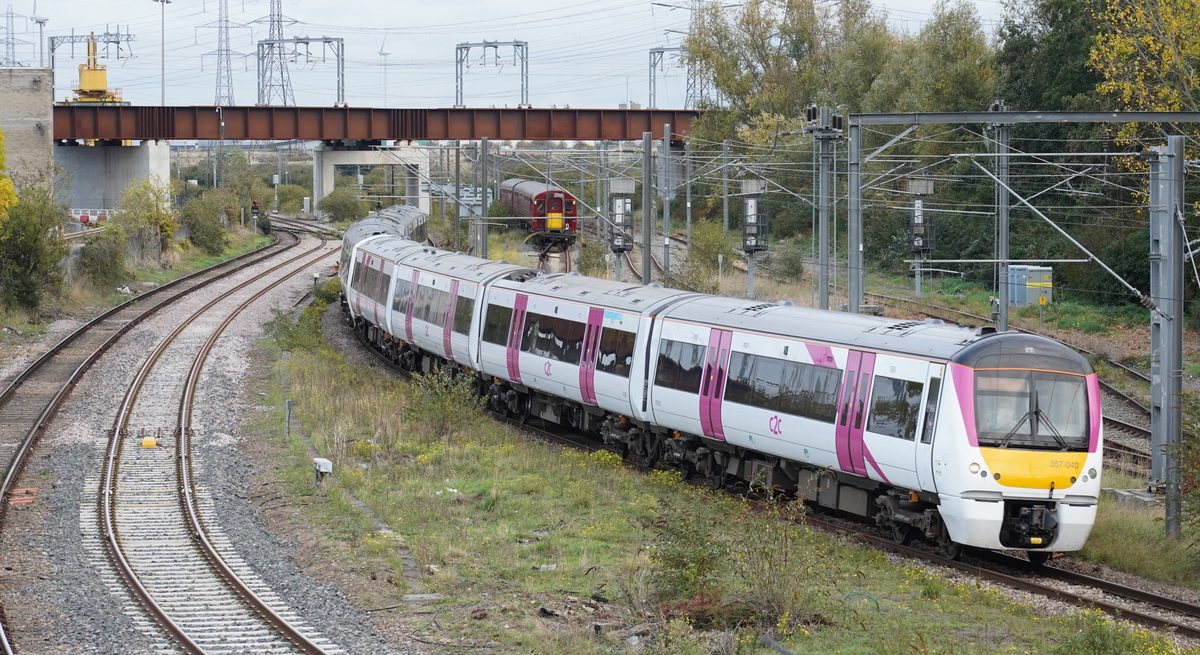
c2c topped Britain's punctuality table last spring. This autumn, just over half its stops have been on time. We look at why.
For years, the line from Fenchurch Street to Shoeburyness was the railway other commuters envied. Last May, c2c was named the most punctual train company in Britain. This autumn its passengers have had a very different railway.
The Seax has gone through c2c's own published performance figures, its apologies to passengers, Network Rail's explanations, the letter MPs sent to rail bosses and the replies to the operator's latest video apology. Together they show how fast the service has fallen, and why.
The numbers
c2c publishes its figures every four weeks. In the four weeks to Sunday 15 November, 53.5% of its trains reached each stop within a minute of the timetable. In the four weeks to 31 May, the figure was 79.4%.
The wider measure the industry now uses tells the same story. It counts stops reached within three minutes of the timetable. That fell from 92.5% in May to 76.4% in the latest period, so nearly one stop in four missed even that mark.
It is a long way from last spring. In the year to 31 March 2026, Network Rail's figures put c2c top of the national table. It reached 91.9% of stops within three minutes and cancelled 1.7% of trains, the lowest rate in the country.
In the four weeks to 17 October, c2c cancelled 4.5% of station calls against its own target of 1.6%. Its rolling annual average on the three-minute measure has slipped to 88.4%.
What has gone wrong
There is no single cause. The line has been hit by one problem after another.
First, the weather. The summer's heat and lack of rain shrank the clay under long stretches of track in Essex, leaving it uneven. Network Rail said soil moisture was at its lowest since its records began in 2009. Speed limits were brought in, and from 25 August c2c journeys between London and Southend took up to eight minutes longer. The operator says these restrictions caused most of its late running in the autumn, and that a full recovery is unlikely until they are lifted.
Signalling failures have stopped trains again and again.
On 8 and 9 September, a signalling problem in the Grays area hit the evening and morning peaks.
On 8 October, a fault at Gas Factory Junction, between Barking and West Ham, led to 81 cancellations on its own.
On 4 November, a failure between Stanford-le-Hope and Grays halted trains and left commuters stranded at Stanford-le-Hope, East Tilbury, Tilbury and Grays.
On 19 November, a fault between Fenchurch Street and Barking disrupted every line into the evening, and West Ham was not served.
The biggest single blow came from a freight train. On 23 October, a GB Railfreight container train heading from London Gateway to the Midlands came off the track near Barking. Rail investigators say the 20th of its 39 wagons derailed at about 8mph. The BBC reported that 1.2km of track was badly damaged. Trains to Purfleet, Rainham and Dagenham Dock did not call again until 11 November. c2c does not run freight trains, but its passengers bore the brunt.
Then, on the evening of Monday 23 November, a fire on a train at Fenchurch Street blocked every c2c line, with disruption expected until 9pm. c2c has not yet said what caused it.
In its own report on the period to 17 October, c2c said it missed every passenger satisfaction target. It blamed the reduced timetables, its older Class 357 trains and cleanliness.
What passengers and MPs say
On 4 November, MPs from both main parties and an independent wrote to c2c and Network Rail demanding a meeting in Parliament. The letter was organised by Thurrock's Labour MP, Jen Craft. The BBC named its signatories as Ms Craft, James Asser and Margaret Mullane (Labour), Bayo Alaba (Independent), and Richard Holden, Julia Lopez, Mark Francois and Rebecca Harris (Conservative).
The MPs listed overcrowded trains, persistent cancellations, long delays and poor replacement transport. They said passengers were facing extra costs to get to work, school and hospital appointments. They asked for a clear explanation and a date when a reliable service would return.
Ms Craft, who commutes on the line herself, told the BBC it had been "one thing after another" this year. She said the line was once known as the "misery line" in the 1990s, and she did not want it to go back to that. Incidents can happen, she said, but the response had been too slow and communication with passengers really poor.
Ms Craft said on 12 November that she had brought c2c and Network Rail's leaders to Parliament to press them. Neither side has published what was agreed.
What c2c and Network Rail say
 Watch on X · 2:22
c2c has apologised many times this autumn. The most direct apology came at 3.23pm on Tuesday 24 November, in a video posted on c2c's X account. In it Jamie Burles, managing director of GBR Anglia, said the service over the past six months had not met the standards passengers rightly expect.
"Too many customers have experienced delays and cancellations," he said, adding that this had hurt confidence in the railway.
Mr Burles set out what is being done. Track teams are carrying out what he called unprecedented levels of treatment, to lift the temporary speed limits left by the hot, dry summer. GBR Anglia is also investing in the power supply: backup batteries, new critical power cables, better monitoring, overhead wires that cope better with heat, and specialist teams sent where they will help most.
Some of this will take time to finish, he said. "I know that words alone won't restore confidence," he added, promising to keep passengers updated.
Earlier in the month, Rob Mullen, chief customer and commercial officer for GBR Anglia, apologised after the 4 November failure. "We're really sorry that the service to passengers on the c2c network hasn't been good enough of late," he said. He said the team was working to restore services through Barking and to make the line more resilient, including to extreme weather.
Much of what has failed is not c2c's own. The track, signals and overhead wires belong to Network Rail, and the train that derailed belonged to a freight company. Network Rail says dried-out clay affects Greater Anglia, the Elizabeth line and lines in Kent and Sussex too.
But the line is now run as one. c2c has been publicly owned since July 2025. Since May 2026 it has been managed with Greater Anglia and Network Rail Anglia by a single leadership team, GBR Anglia, set up to bring track and train together. Mr Burles leads it. Ellie Burrows is managing director of Network Rail's Eastern region.
'It's a shambles': how passengers answered the apology
Passengers were quick to reply to Mr Burles' video on X. By the next morning it had been watched more than 50,000 times, and the replies show how far trust has fallen.
"I have lost all confidence in your trainline," wrote one commuter, posting as MrsLovingLife. "I, like many other commuters, wake up and think are we getting to work today? If we do, it's then, are we going to get home, hassle free? It's a shambles."
Kirsty MacDougall replied: "Oh the irony that I am watching this from yet another delayed train! That's three train journeys in a row now! C2C used to be such a reliable service. Hardly any issues. What happened!?"
Stuart A. wrote: "Sadly Apology not accepted. Excuses after excuses."
Others asked why the track work was not done during what Simon Lester called "the hottest summer for years". One passenger called for c2c to "drastically reduce fares until there's no more issues on the line". Another said they had not had a reply to a complaint made 96 days earlier. c2c answered, asking for the case reference so its customer relations team could chase it.
What happens next
c2c says an elevated risk of cancellations is expected to last until February 2027. It says punctuality will not fully recover until the speed restrictions are lifted, and that this depends on the weather.
More engineering work is planned, including over the weekend of 28 and 29 November, so check before you travel.
If your journey is delayed by 15 minutes or more, you can claim compensation through c2c's Delay Repay scheme. c2c Smartcard holders are paid automatically for delays of more than two minutes.
Key points
- 53.5% of trains on time at each stop by mid-November, down from 79.4% in May
- A freight derailment, repeated signalling failures and dried-out clay all hit the line
- c2c expects a higher risk of cancellations until February 2027
- Delayed 15 minutes or more? You can claim Delay Repay
You may be interested in
- c2c gets £2m plan to fix delays, with night and weekend works in December Southend-on-Sea · Thursday 26 November
- Southend Airport gets easyJet flights to Corfu from May Southend Airport · Thursday 26 November
- Lower Thames Crossing puts world-first electric haulers to work Thurrock · Tuesday 24 November
- c2c signalling fault near Barking disrupts trains on all routes Southend-on-Sea · Thursday 19 November
- London Gateway systems fault queues lorries back to A13 Manorway Stanford-le-Hope · Thursday 19 November
More Basildon news → More Thurrock news → More traffic & travel news →
Our research also drew on
- c2c video apology on X x.com ↗
- c2c latest news and apologies c2c-online.co.uk ↗
- c2c apology, 8 and 9 September c2c-online.co.uk ↗
- c2c Delay Repay c2c-online.co.uk ↗
- ORR c2c key statistics 2025/26 dataportal.orr.gov.uk ↗
- Rail Business Daily news.railbusinessdaily.com ↗
- BBC News yahoo.com ↗
- Echo uk.news.yahoo.com ↗
- Thurrock Nub News thurrock.nub.news ↗
- Romford Recorder romfordrecorder.co.uk ↗
- RAIL: RAIB to investigate Barking derailment railmagazine.com ↗
- RAIL: speed restrictions London to Southend railmagazine.com ↗
- Network Rail: soil moisture deficit networkrail.co.uk ↗
- Infrastructure Now infrastructure-now.co.uk ↗
- National Rail: 19 November fault nationalrail.co.uk ↗
- Newham Recorder: engineering works newhamrecorder.co.uk ↗
- Network Rail: Eastern region networkrail.co.uk ↗
This is original reporting by The Seax. Every figure was checked three times before publication. Spotted a mistake? Tell us. More from Seax Investigates →
Know more about this story, or have one of your own? Email news@theseax.com. Corrections to corrections@theseax.com.