
Maldon Salt mixes German rock salt into its product, Observer finds
Lorries delivering bulk bags of mined salt were filmed at the firm's Goldhanger works. Regulators say the product is legally labelled.
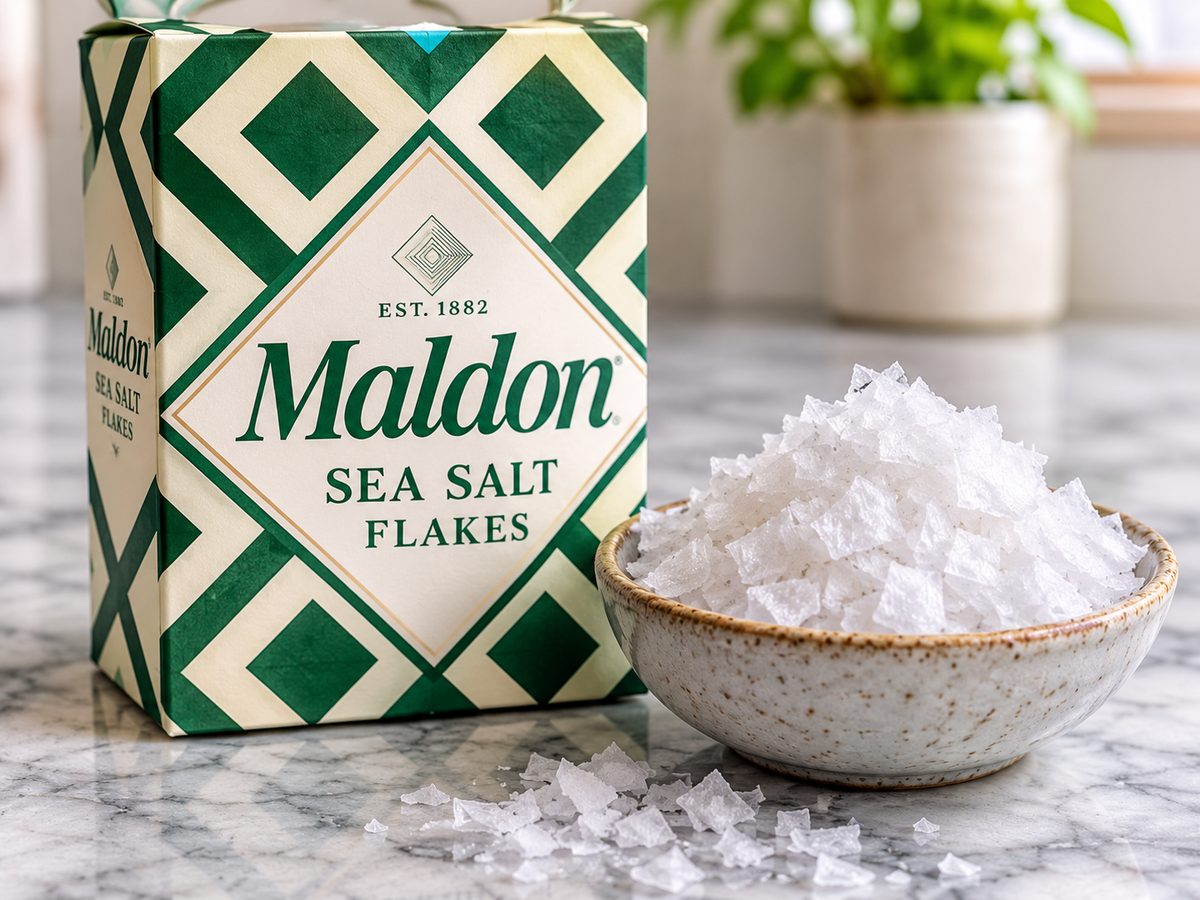
Maldon Salt is the Essex brand whose pyramid-shaped flakes have become a fixture in British kitchens. An Observer investigation has found that it mixes rock salt mined in Germany into the seawater it draws from the Blackwater estuary.
The newspaper watched the company's main works at Longwick Farm, near Goldhanger, for three days last month. It saw lorries unloading large white bags marked with the logo of K+S, one of the world's biggest salt miners, and estimates that about 50 tonnes of rock salt arrive each week.
After the Observer contacted the firm, Maldon updated its website to describe a "long-established salt-on-salt process". In that process, ancient sea salt helps make the brine and adds minerals to the seawater. Maldon says rock salt is simply sea salt left behind by prehistoric seas. It says its "100% sea salt flakes" label is accurate, it has never hidden the method, and regulators know exactly how its salt is made.
Salt-on-salt is an old technique. Dissolving rock salt in seawater makes a stronger brine, which takes less energy to boil off. Local records show salt makers at Goldhanger used Cheshire rock salt this way in the 18th and 19th centuries. The Observer reports that Maldon bought its rock salt from Cheshire until about 2020 and has mostly bought it from Germany since then.
The open question is how much of each box comes from the estuary. A UCL chemistry professor told the paper that once two salts dissolve together, nobody can tell them apart. Maldon does not dispute that some of the added rock salt ends up in the finished product.
Essex County Council trading standards officers visited the site with the FSA in November 2019 and took samples. After advice from a public analyst, the FSA and Defra, they decided no action was needed. Trading standards said there are no legal rules for judging whether "sea salt" is an accurate description. Maldon District Council says it has no planning or environmental health concerns.
Neighbours have questioned the deliveries since they first filmed them in 2010. Linsay Everest, who recorded the early footage, said: "They should be clear about what they are doing."
The case echoes Hebridean Sea Salt, which collapsed in 2017 after Food Standards Scotland found more than 80 per cent of its salt was imported. No similar finding has been made against Maldon.
Maldon Salt has made salt in the town for 144 years and is a major local employer. It says its products fully comply with food and labelling law in every market where they are sold.
Key points
- Maldon added a description of its "salt-on-salt" method to its website after the Observer got in touch
- Planning permission for the works covers salt made from Blackwater water
- Trading standards and the Food Standards Agency inspected the site in 2019 and took no action
- The UK has no legal definition of sea salt
Also reported by
- Maldon Salt maldonsalt.com ↗
- Maldon District Council democracy.maldon.gov.uk ↗
- Food Standards Scotland foodstandards.gov.scot ↗
- Essex County News essexcountynews.co.uk ↗
- Daily Gazette gazette-news.co.uk ↗
- Daily Mail dailymail.com ↗
- GB News gbnews.com ↗
- TheJournal.ie thejournal.ie ↗
- Essex County News essexcountynews.co.uk ↗
This is a summary written by The Seax. The original reporting, quotes and images belong to The Observer and the other outlets listed. Spotted a mistake? Tell us.
Know more about this story, or have one of your own? Email news@theseax.com. Corrections to corrections@theseax.com.